Transkript als pdf
Literaturquellen
Von den Metazoa zu den Bilateria
Allgemeine Literatur zur Phylogenie der Metazoa bzw. Bilateria. Es gibt eine Reihe guter Lehrbücher, die sich mit der Phylogenie der Bilateria sowie derer einzelner Tierstämme befassen. Hier eine Auswahl:
Burda, H., Hilken, G., Zrzavy, J. (2008): Systematische Zoologie. UTB Basics
Campbell, N.A., Reece, J.B. et al: Biology (z.B. 12. Auflage, 2020); Kapitel 32 „Eine Einführung in die Diversität und Evolution der Metazoa“.
Minelli, A. (2009): Perspectives in Animal Phyloigeny and Evolution. Oxoford University Press, Kapitel 3 „Metazoans entert he stage“, Kapitel 4 „Deep branches of the metazoan tree“ und Kapitel 5 „The entangled phylogeny of the Bilateria“
Nielsen, C. (2012). Animal Evolution: Interrelationships of the Living Phyla. Oxford University Press.
Ruppert, E., Fox, R., Barnes, R. (2004): Invertebrate Zoology. Cengage Learning, Kapitel 6 „Introduction to Eumetazoa“
Ruppert, E., Fox, R., Barnes, R. (2004): Invertebrate Zoology. Cengage Learning, Kapitel 9 „Introduction to Bilateria“
Sadava, D., et al. (2019): Purves Biologie. Berlin Heidelberg New York: Springer-Verlag. Kapitel 30 „Die Entstehung der Tiere und die Evolution ihrer Körperbaupläne“.
Rosselbroich, B. (2014): On the Origin of Autonomy. A New Look at the Major Transitions in Evolution. Springer Verlag, Kapitel 4 „The Major Transitions in Early Evolution“
Schmidt-Rhaesa, A. (2007): The Evolution of Organ Systems. Oxford University Press, Kapitel 2 „The phylogenetic frame“
Valentine, JM (2004): On the Origins of Phyla. University of Chicago Press
Literatur zu offenen Fragen an der Basis der Metazoa („Porifera – first“ oder „Ctenophora first“)
Populärwissenschaftliche, deutsche Zusammenfassung von der AG Evolutionsbiologie:
Die Rippenquallen und der Stammbaum des Tierreichs: https://www.ag-evolutionsbiologie.de/pdf/2014/rippenquallen.pdf
Arendt Detlev, Benito-Gutierrez Elia, Brunet Thibaut and Marlow Heather 2015Gastric pouches and the mucociliary sole: setting the stage for nervous system evolutionPhil. Trans. R. Soc. B37020150286
Dunn, Casey W.; Giribet, Gonzalo; Edgecombe, Gregory D.; Hejnol, Andreas (23 November 2014). „Animal Phylogeny and Its Evolutionary Implications“. Annual Review of Ecology, Evolution, and Systematics. 45 (1): 371–395.
Feuda, Roberto; Dohrmann, Martin; Pett, Walker; Philippe, Hervé; Rota-Stabelli, Omar; et al. (2017). „Improved Modeling of Compositional Heterogeneity Supports Sponges as Sister to All Other Animals“. Current Biology. 27 (24): 3864–3870.e4.
Maxmen, A. (2013) Evolutionary Enigmas. Comb jelly genetics suggest a radical redrawing of the tree of life. Science News 183, 20–25.
Moroz Leonid L. and Kohn Andrea B. 2016Independent origins of neurons and synapses: insights from ctenophoresPhil. Trans. R. Soc. B37120150041
Moroz, L., Kocot, K., Citarella, M. et al. The ctenophore genome and the evolutionary origins of neural systems. Nature 510, 109–114 (2014). https://doi.org/10.1038/nature13400
Nielsen, C. (2020): Who came first, sponges or comb jellies? https://www.sciencenordic.com/biology-denmark-natural-sciences/who-came-first-sponges-or-comb-jellies/1729497
Nielsen Claus 2019 Early animal evolution: a morphologist’s view R. Soc. Open Sci.6190638 https://royalsocietypublishing.org/doi/10.1098/rsos.190638
Nosenko T, Schreiber F, Adamska M, Adamski M, Eitel M, Hammel J, Maldonado M, Müller WE, Nickel M, Schierwater B, Vacelet J, Wiens M, Wörheide G. Deep metazoan phylogeny: when different genes tell different stories. Mol Phylogenet Evol. 2013 Apr;67(1):223-33. doi: 10.1016/j.ympev.2013.01.010. Epub 2013 Jan 23. PMID: 23353073.
Pandey, A., & Braun, E. L. (2020). Phylogenetic Analyses of Sites in Different Protein Structural Environments Result in Distinct Placements of the Metazoan Root. Biology, 9(4), 64. https://doi.org/10.3390/biology9040064
Rokas, A. (2013) My oldest sister is a sea walnut? Science 342, 1327–1329.
Schultz, Darrin T.; Haddock, Steven H. D.; Bredeson, Jessen V.; Green, Richard E.; Simakov, Oleg; Rokhsar, Daniel S. (17 May 2023). „Ancient gene linkages support ctenophores as sister to other animals“. Nature. 618 (7963): 110–117.
Telford, M., Moroz, L. & Halanych, K. A sisterly dispute. Nature 529, 286–287 (2016). https://doi.org/10.1038/529286a
Whelan, Nathan V.; Kocot, Kevin M.; Moroz, Tatiana P.; Mukherjee, Krishanu; Williams, Peter; et al. (9 October 2017). „Ctenophore relationships and their placement as the sister group to all other animals“. Nature Ecology & Evolution. 1 (11): 1737–1746.
Allgemeine Literatur zu den Porifera:
Burda, H., Hilken, G., Zrzavy, J. (2008): Systematische Zoologie. UTB Basics, Kapitel 3
Campbell, N.A., Reece, J.B. et al: Biology (z.B. 12. Auflage, 2020); Kapitel 33 „Eine Einführung in die wirbellosen Tiere“.
Giribet, G., Edgecombe, G. (2020): The Invertebrate Tree of Life. Princeton University Press, Kapitel 4 „Porifera“
Ruppert, E., Fox, R., Barnes, R. (2004): Invertebrate Zoology. Cengage Learning, Kapitel 5 „Porifera und Placozoa“
Sadava, D., et al. (2019): Purves Biologie. Berlin Heidelberg New York: Springer-Verlag. Kapitel 30 „Die Entstehung der Tiere und die Evolution ihrer Körperbaupläne“.
Westheide, W., Rieger, R (Hrsg. 2007): Spezielle Zoologie Teil 1: Einzeller und wirbellose Tiere. Spektrum Verlag, S. 91ff.
Allgemeine Literatur zu den Ctenophora:
Burda, H., Hilken, G., Zrzavy, J. (2008): Systematische Zoologie. UTB Basics, Kapitel 3
Campbell, N.A., Reece, J.B. et al: Biology (z.B. 12. Auflage, 2020); Kapitel 33 „Eine Einführung in die wirbellosen Tiere“.
Giribet, G., Edgecombe, G. (2020): The Invertebrate Tree of Life. Princeton University Press, Kapitel 3 „Ctenophora“
Ruppert, E., Fox, R., Barnes, R. (2004): Invertebrate Zoology. Cengage Learning, Kapitel 8 „Ctenophora“
Sadava, D., et al. (2019): Purves Biologie. Berlin Heidelberg New York: Springer-Verlag. Kapitel 30 „Die Entstehung der Tiere und die Evolution ihrer Körperbaupläne“.
Westheide, W., Rieger, R (Hrsg. 2007): Spezielle Zoologie Teil 1: Einzeller und wirbellose Tiere. Spektrum Verlag, S. 175ff.
Allgemeine Literatur zu den Placozoa:
Burda, H., Hilken, G., Zrzavy, J. (2008): Systematische Zoologie. UTB Basics, Kapitel 3
Campbell, N.A., Reece, J.B. et al: Biology (z.B. 12. Auflage, 2020); Kapitel 33 „Eine Einführung in die wirbellosen Tiere“.
Giribet, G., Edgecombe, G. (2020): The Invertebrate Tree of Life. Princeton University Press, Kapitel 7 „Placozoa“
Ruppert, E., Fox, R., Barnes, R. (2004): Invertebrate Zoology. Cengage Learning, Kapitel 5 „Porifera und Placozoa“
Sadava, D., et al. (2019): Purves Biologie. Berlin Heidelberg New York: Springer-Verlag. Kapitel 30 „Die Entstehung der Tiere und die Evolution ihrer Körperbaupläne“.
Westheide, W., Rieger, R (Hrsg. 2007): Spezielle Zoologie Teil 1: Einzeller und wirbellose Tiere. Spektrum Verlag, S. 117ff.
Allgemeine Literatur zu den Cnidaria:
Burda, H., Hilken, G., Zrzavy, J. (2008): Systematische Zoologie. UTB Basics, Kapitel 3
Campbell, N.A., Reece, J.B. et al: Biology (z.B. 12. Auflage, 2020); Kapitel 33 „Eine Einführung in die wirbellosen Tiere“.
Giribet, G., Edgecombe, G. (2020): The Invertebrate Tree of Life. Princeton University Press, Kapitel 8 „Cnidaria“
Ruppert, E., Fox, R., Barnes, R. (2004): Invertebrate Zoology. Cengage Learning, Kapitel 7 „Cnidaria“
Sadava, D., et al. (2019): Purves Biologie. Berlin Heidelberg New York: Springer-Verlag. Kapitel 30 „Die Entstehung der Tiere und die Evolution ihrer Körperbaupläne“.
Westheide, W., Rieger, R (Hrsg. 2007): Spezielle Zoologie Teil 1: Einzeller und wirbellose Tiere. Spektrum Verlag, S. 135ff.
Bilateral-Symmetrie und Cephalisation
Die allgemeine Beschreibung der Körpersymmetrie und Cephalisation finden sich in einschlägigen Zoologie-Lehrbüchern:
Campbell, N.A., Reece, J.B. et al: Biology (z.B. 12. Auflage, 2020); Kapitel 32 „Eine Einführung in die Diversität und Evolution der Metazoa“.
Giribet, G., Edgecombe, G. (2020): The Invertebrate Tree of Life. Princeton University Press, Kapitel 9 „Bilateria“
Minelli, A. (2009): Perspectives in Animal Phyloigeny and Evolution. Oxoford University Press, Kapitel 8 „The evolution of animal body architecture“
Rosselbroich, B. (2014): On the Origin of Autonomy. A New Look at the Major Transitions in Evolution. Springer Verlag, Kapitel 4 „The Major Transitions in Early Evolution“
Schmidt-Rhaesa, A. (2007): The Evolution of Organ Systems. Oxford University Press, Kapitel 3 „General Body Organisation“
Weitere Spezialliteratur in Bezug zur Körpersymmetrie:
Finnerty, John R. (November 2005). „Did internal transport, rather than directed locomotion, favor the evolution of bilateral symmetry in animals?“ (PDF). BioEssays. 27 (11): 1174–1180.
Freeman, Gary (2009). „The rise of bilaterians“. Historical Biology. 21 (1–2): 99–114
Holló, Gábor (2015). „A new paradigm for animal symmetry“. Interface Focus. 5 (6): 20150032.
Martindale, Mark Q.; Henry, Jonathan Q. (1998). „The Development of Radial and Biradial Symmetry: The Evolution of Bilaterality1“. American Zoology. 38 (4): 672–684.
Weitere Spezialliteratur in Bezug zur Cephalisation:
Hier sind, neben den oben erwähnten Aspekten insbesondere die Arbeiten von Wolfgang Gutmann hervorzuheben. In Bezug zur Cephalisation (Am Beispiel der Evolution der Wirbeltiere):
Gutmann, W. F. (1969): Die Entstehung des Vertebraten-Kopfes, ein phylogenetisches Modell. Senckenbergiana biol. 50 (5/6): 433 – 471, Frankfurt am Main
Morula, Blastula, Gastrulation und Keimblätter
Die Literatur zur frühen Embryonalentwicklung findet sich in vielen einschlägigen Lehrbüchern. Hier eine Auswahl:
Baressi, M. J. F., Gilbert, S. F. (2020): Developmental Biology, Sinauer Associates. 12. Auflage, Abschnitt „III Early Development“, welches die kapitel 8 bis 12 umfasst.
Campbell, N.A., Reece, J.B. et al: Biology (z.B. 12. Auflage, 2020); Kapitel 32 „Eine Einführung in die Diversität und Evolution der Metazoa“.
Campbell, N.A., Reece, J.B. et al: Biology (z.B. 12. Auflage, 2020); Kapitel 47 „Die Entwicklung der Tiere“.
Minelli, A. (2009): Perspectives in Animal Phyloigeny and Evolution. Oxoford University Press, Kapitel 8 „The evolution of animal body architecture“
Rosselbroich, B. (2014): On the Origin of Autonomy. A New Look at the Major Transitions in Evolution. Springer Verlag, Kapitel 4 „The Major Transitions in Early Evolution“
Sadava, D., et al. (2019): Purves Biologie. Berlin Heidelberg New York: Springer-Verlag. Kapitel 43 „Entwicklung der Tiere“.
Schmidt-Rhaesa, A. (2007): The Evolution of Organ Systems. Oxford University Press, Kapitel 3 „General Body Organisation“
Wolpert, L. (2019): Principles of Development, Oxford University Press, 6. Auflage, Kapitel 3 „Vertebrate development I: life cycles and experimental techniques“
Die sekundäre Leibeshöhle: das Coelom
Neben den schon in den vorherigen Abschnitten erwähnten Literaturquellen zur Embryonalentwicklung, sind auch folgende zu empfehlen:
Minelli, A. (2009): Perspectives in Animal Phyloigeny and Evolution. Oxoford University Press, Kapitel 8 „The evolution of animal body architecture“
Rosselbroich, B. (2014): On the Origin of Autonomy. A New Look at the Major Transitions in Evolution. Springer Verlag, Kapitel 4 „The Major Transitions in Early Evolution“ und Kapitel 5.6. „Body Cavities“
Schmidt-Rhaesa, A. (2007): The Evolution of Organ Systems. Oxford University Press, Kapitel 3 „General Body Organisation“ und Kapitel 8 „Body Cavities“
Ursprünge des Mesoderms
Einige Spezialliteratur widmet sich dem evolutionären Ursprung des Mesoderms:
Arendt, D. (2008). The evolution of cell types in animals: emerging principles from molecular studies. Nature Reviews Genetics, 9(11), 868–882.
Martindale MQ, Pang K, Finnerty JR. Investigating the origins of triploblasty: ‚mesodermal‘ gene expression in a diploblastic animal, the sea anemone Nematostella vectensis (phylum, Cnidaria; class, Anthozoa). Development. 2004 May;131(10):2463-74. doi: 10.1242/dev.01119. PMID: 15128674.
Martindale, M. Q., & Hejnol, A. (2009). A developmental perspective: changes in the position of the blastopore during bilaterian evolution. Developmental Cell, 17(2), 162–174.
Sebé-Pedrós, A., et al. (2018). Early metazoan cell type diversity and the evolution of multicellular gene regulation. Nature Ecology & Evolution, 2(7), 1176–1188.
Seipel K, Schmid V. Mesodermal anatomies in cnidarian polyps and medusae. Int J Dev Biol. 2006;50(7):589-99. doi: 10.1387/ijdb.062150ks. PMID: 16892172.
Steinmetz, P.R.H., Aman, A., Kraus, J.E.M. et al. Gut-like ectodermal tissue in a sea anemone challenges germ layer homology. Nat Ecol Evol 1, 1535–1542 (2017). https://doi.org/10.1038/s41559-017-0285-5
Steinmetz, P.R.H. et al. (2012) Independent evolution of striated muscles in cnidarians and bilaterians. Nature 487, 231–234.
Technau U. Gastrulation and germ layer formation in the sea anemone Nematostella vectensis and other cnidarians. Mech Dev. 2020 Sep;163:103628. doi: 10.1016/j.mod.2020.103628. Epub 2020 Jun 27. PMID: 32603823.
Technau, U., & Scholz, C. B. (2003). Origin and evolution of endoderm and mesoderm. International Journal of Developmental Biology, 47(7-8), 531–539.
Coelom und Körperform
Allgemeine Literatur zur Rolle des Coeloms:
Minelli, A. (2009): Perspectives in Animal Phyloigeny and Evolution. Oxoford University Press, Kapitel 8 „The evolution of animal body architecture“
Rosselbroich, B. (2014): On the Origin of Autonomy. A New Look at the Major Transitions in Evolution. Springer Verlag, Kapitel 4 „The Major Transitions in Early Evolution“ und Kapitel 5.6. „Body Cavities“
Schmidt-Rhaesa, A. (2007): The Evolution of Organ Systems. Oxford University Press, Kapitel 8 „Body Cavities“
Hervorzuheben sind hier aber die Arbeiter der „Frankfurter Evolutionstheorie“, auch „kritische Evolutionstheorie“ genannt, welche dem Coelom eine besondere Rolle bei der Evolution der Tiere beimessen und in späteren Kapiteln dieser Serie erneut aufgegriffen wird. Einige Literatur zur Übersicht:
Bonik, K., Grasshoff, M. & Gutmann, W. F. (1976): Die Evolution der Tierkonstruktionen III. Vom Gallertoid zur Coelomhydraulik. Natur und Museum 106 (6): 178 – 188
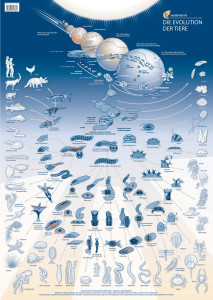
Gudo, M. (2007): Die Evolution der Tiere. Querschnitte Materialien für Unterrichtsvorbereitung und Selbststudium. Frankfurt a. M.
Gudo, M. (2008): Die Evolution der schwimmenden Vierfüßer – Parallelentwicklungen für die Fortbewegung im Wasser. Querschnitte Materialien für Unterrichtsvorbereitung und Selbststudium. Frankfurt a. M
Gutmann, W. F. (1966): Funktionsmorphologische Beiträge zur „Gastrea-Coelomtheorie“. Senck. Biol. 47 (3): 225 – 250, Frankfurt am Main
Gutmann, W. F. (1966): Coelomgliederung, Myomere und die Frage der Vertebraten-Antezedenten. Z. zool. Syst. Evolutionsf., 4: 225 – 250, Frankfurt am Main
Gutmann, W. F. (1966): Funktion der Myomere in phylogenetischer Sicht. Senck. Biol. 47 (2): 155 – 160, Frankfurt am Main
Gutmann, W. F. (1966): Coelomgliederung, Myomerie und die Frage nach den Vertebraten-Antezendenten. Z. zool. Syst. Evolutionsf. 4: 13 – 57
Gutmann, W. F. (1967): Zu Bau und Leistung von Tierkonstruktionen 8. Muskelfunktion und Körperbau. Natur und Museum 97 (2): 59 – 69
Gutmann, W. F. (1967): Die Entstehung des Coeloms und seine phylogenetische Abwandlung im Deuterostomia-Stammbaum. Sonderdruck aus Zoologischer Anzeiger 179, Heft ½: 109 – 131
Gutmann, W. F. (1968): Die Evolution der Leibeshöhle im Wirbeltier-Stamm. Verlag Waldemar Kramer, Frankfurt am Main
Gutmann, W. F. (1969): Die Funktion des abgewandelten Coeloms. Sonderdruck aus Z. f. Zool. Systematik u. Evolutionsforschung Bd. 7, H. 4., S. 259 – 273
Gutmann, W. F. (1972): Die Hydroskelett-Theorie. Aufsätze und Reden der Senckenbergischen Naturforschenden Gesellschaft, 21: 91
Gutmann, W. F. (1988): The Hydraulic Principle. American Zoologist, 28: 257 – 266
Gutmann, W. F. (1993): Hydraulik, Konstruktion und Evolution. Praxis der Naturwissenschaften. 42 (8): 1 – 12
Gutmann, W. F. (1995): Die Evolution hydraulischer Konstruktionen – organismische Wandlung statt altdarwinistischer Anpassung. Senckenberg Buch 65, Kramer Frankfurt a. M.
Literatur zu den Xenacoelomorpha:
Abalde, Samuel; Jondelius, Ulf (2025-02-10). Whelan, Nathan (ed.). „A Phylogenomic Backbone for Acoelomorpha Inferred From Transcriptomic Data“. Systematic Biology. 74 (1): 70–85.
Bourlat, Sarah J.; Juliusdottir, Thorhildur; Lowe, Christopher J.; Freeman, Robert; Aronowicz, Jochanan; et al. (2006). „Deuterostome phylogeny reveals monophyletic chordates and the new phylum Xenoturbellida“. Nature. 444 (7115): 85–88.
Brusca, Richard C. (2016). „Introduction to the Bilateria and the Phylum Xenacoelomorpha: Triploblasty and Bilateral Symmetry Provide New Avenues for Animal Radiation“ (PDF). Invertebrates. Sinauer Associates. pp. 345–372.
Cannon, Johanna Taylor; Vellutini, Bruno Cossermelli; Smith, Julian; Ronquist, Fredrik; Jondelius, Ulf; Hejnol, Andreas (2016). „Xenacoelomorpha is the sister group to Nephrozoa“. Nature. 530 (7588): 89–93.
Giribet, G., Edgecombe, G. (2020): The Invertebrate Tree of Life. Princeton University Press, Kapitel 10 „Xenacoelomorpha“
Mulhair, Peter O.; McCarthy, Charley G.P.; Siu-Ting, Karen; Creevey, Christopher J.; O’Connell, Mary J. (December 2022). „Filtering artifactual signal increases support for Xenacoelomorpha and Ambulacraria sister relationship in the animal tree of life“. Current Biology. 32 (23): 5180–5188.e3.
Philippe, H.; Brinkmann, H.; Copley, R. R.; Moroz, L. L.; Nakano, H.; Poustka, A. J.; Wallberg, A.; Peterson, K. J.; Telford, M. J. (10 February 2011). „Acoelomorph flatworms are deuterostomes related to Xenoturbella“. Nature. 470 (7333): 255–258
Philippe, Hervé; Poustka, Albert J.; Chiodin, Marta; Hoff, Katharina J.; Dessimoz, Christophe; et al. (2019). „Mitigating Anticipated Effects of Systematic Errors Supports Sister-Group Relationship between Xenacoelomorpha and Ambulacraria“. Current Biology. 29 (11): 1818–1826.e6.
Robertson, Helen E.; Sebé-Pedrós, Arnau; Saudemont, Baptiste; Loe-Mie, Yann; Zakrzewski, Anne-C.; Grau-Bové, Xavier; Mailhe, Marie-Pierre; Schiffer, Philipp; Telford, Maximilian J.; Marlow, Heather (2024-03-19). „Single cell atlas of Xenoturbella bocki highlights limited cell-type complexity“. Nature Communications. 15 (1): 2469.
Ruiz-Trillo, I., Paps, J. Acoelomorpha: earliest branching bilaterians or deuterostomes?. Org Divers Evol 16, 391–399 (2016). https://doi.org/10.1007/s13127-015-0239-1
Weitere Literatur in Bezug zur genetischen Kontrolle der Segmentierung und ob der Urbilateria segmentiert war:
Einen Überblick zu diesem Thema liefert:
Held, L. I. (2017): Deep Homology? Oxford University Press, S. 20ff.
Spezialliteratur:
Balavoine, G.; Adoutte, Andre (2003). „The segmented Urbilateria: A testable scenario“. Integrative and Comparative Biology. 43 (1): 137–147.
Blair, S.S. (2009). Segmentation in animals. Curr. Biol. 18, R991–R995.
Chipman, A.D. (2008). Annelids step forward. Evol. Dev. 10, 141–142.
Chipman, A.D. (2010). Parallel evolution of segmentation by co-option of ancestral gene regulatory networks. BioEssays 32, 60–70.
Davis, G.K., and Patel, N.H. (1999). The origin and evolution of segmentation. Trends Genet. 9, #12, M68–M72.
De Robertis, E.M., and Sasai, Y. (1996). A common plan for dorsoventral patterning in Bilateria. Nature 380, 37–40.
Deutsch, J.S. (2004). Segments and parasegments in arthropods: a functional perspective. BioEssays 26, 1117–1125.
Holland, L.Z. (2000). Body-plan evolution in the Bilateria: early antero-posterior patterning and the deuterostome-protostome dichotomy. Curr. Opin. Genet. Dev. 10, 434–442.
Holland, N.D., Holland, L.Z., and Holland, P.W.H. (2015). Scenarios for the making of vertebrates. Nature 520, 450–455.
Peel, A., and Akam, M. (2003). Evolution of segmentation: rolling back the clock.Curr. Biol. 13, R708–R710.
Seaver, E.C. (2003). Segmentation: mono- or polyphyletic? Int. J. Dev. Biol. 47, 583–595.
Tautz, D. (2004). Segmentation. Dev. Cell 7, 301–312.
Ursprünge der Bilateria
Bengtson, S.; Donoghue, P. C. J.; Cunningham, J. A.; Yin, C. (2012). „A merciful death for the ‚earliest bilaterian,‘ Vernanimalcula“. Evolution & Development. 14 (5): 421–427.
Evans, Scott D.; Hughes, Ian V.; Gehling, James G.; Droser, Mary L. (7 April 2020). „Discovery of the oldest bilaterian from the Ediacaran of South Australia“. Proceedings of the National Academy of Sciences. 117 (14): 7845–7850
Fedonkin, M. A.; Waggoner, B. M. (November 1997). „The Late Precambrian fossil Kimberella is a mollusc-like bilaterian organism“. Nature. 388 (6645): 868–871.
Hagadorn, J. W.; Xiao, S.; Donoghue, P. C. J.; Bengtson, S.; Gostling, N. J.; Pawlowska, M.; Raff, E. C.; Raff, R. A.; Turner, F. R.; Chongyu, Y.; Zhou, C.; Yuan, X.; McFeely, M. B.; Stampanoni, M.; Nealson, K. H. (13 October 2006). „Cellular and Subcellular Structure of Neoproterozoic Animal Embryos“. Science. 314 (5797): 291–294.
Oschmann, W. (2016): Evolution der Erde. Utb
Pecoits, E.; Konhauser, K. O.; Aubet, N. R.; Heaman, L. M.; Veroslavsky, G.; Stern, R. A.; Gingras, M. K. (June 29, 2012). „Bilaterian burrows and grazing behavior at >585 million years ago“. Science. 336 (6089): 1693–1696.
Peterson, Kevin J.; Cotton, James A.; Gehling, James G.; Pisani, Davide (27 April 2008). „The Ediacaran emergence of bilaterians: congruence between the genetic and the geological fossil records“. Philosophical Transactions of the Royal Society of London B: Biological Sciences. 363 (1496): 1435–1443.
Deuterostomia
Allgemeine Literatur:
Campbell, N.A., Reece, J.B. et al: Biology (z.B. 12. Auflage, 2020); Kapitel 32 „Eine Einführung in die Diversität und Evolution der Metazoa“.
Giribet, G., Edgecombe, G. (2020): The Invertebrate Tree of Life. Princeton University Press, Kapitel 14 „Deuterostomia“
Giribet, G., Edgecombe, G. (2020): The Invertebrate Tree of Life. Princeton University Press, Kapitel 19 „Protostomia“
Ruppert, E., Fox, R., Barnes, R. (2004): Invertebrate Zoology. Cengage Learning, Kapitel 27 „Introduction to Deuterostomia and Hemichordata“
Sadava, D., et al. (2019): Purves Biologie. Berlin Heidelberg New York: Springer-Verlag. Kapitel 31 „Protostomia“.
Sadava, D., et al. (2019): Purves Biologie. Berlin Heidelberg New York: Springer-Verlag. Kapitel 32 „Deuterostomia“.
Einige ausgewählte Spezialliteratur, die die Monophylie der Deuterostomia bestätigen:
Blair, Jaime E., and Hedges, S. Blair 2005. “Molecular phylogeny and divergence times of deuterostome animals.” Molecular Biology and Evolution 22: 2275– 2284.
Cameron, Chris B., Garey, James R., and Swalla, Billie J. 2000. “Evolution of the chordate body plan: New insights from phylogenetic analyses of deuterostome phyla.” Proceedings of the National Academy of Sciences of the United States of America 97: 4469– 4474.
Chea, Helen K., Wright, Christopher V., and Swalla, Billie J. 2005. “Nodal signaling and the evolution of deuterostome gastrulation.” Developmental Dynamics 234: 269– 278.
Gerhart, John. 2006. “The deuterostome ancestor.” Cellular Physiology 209: 677– 685.
Martín-Durán, José M.; Passamaneck, Yale J.; Martindale, Mark Q.; Hejnol, Andreas (2016). „The developmental basis for the recurrent evolution of deuterostomy and protostomy“. Nature Ecology & Evolution. 1 (1): 0005
Simakov, Oleg, et al. 2015. “Hemichordate genomes and deuterostome origins.” Nature 527: 459– 465.
Zitierte Studie, die die Monophylie der Deuterostomia kritisch hinterfragt:
Serra Silva A, Natsidis P, Piovani L, Kapli P, Telford MJ. Is the deuterostome clade an artifact? Curr Biol. 2025 Aug 4;35(15):3611-3623.e3. doi: 10.1016/j.cub.2025.06.045. Epub 2025 Jul 11. PMID: 40651466.
Wie konnten die Bilateria entstehen?
Copesches Gesetz:
Noel A. Heim et al. ,Cope’s rule in the evolution of marine animals.Science347,867-870(2015).DOI:10.1126/science.1260065
David W. E. Hone, Michael J. Benton: The evolution of large size: how does Cope’s Rule work? In: Trends in ecology and evolution. 20. Jahrgang, Nr. 1, 2005, S. 4–6,
Stephen Jay Gould: Cope’s rule as psychological artefact. In: Nature. 385. Jahrgang, 1997, S. 199–200,
David Jablonski: Body-size evolution in Cretaceous molluscs and the status of Cope’s rule. In: Nature. 385. Jahrgang, 1997, S. 250–252
Scinexx (2002): Alles wird immer größer – oder doch nicht? Die Widerlegung der Copeschen Regel. https://www.scinexx.de/dossierartikel/alles-wird-immer-groesser-oder-doch-nicht/
Arbeiten von Claus Nielsen:
Nielsen, Claus (1985). „Animal phylogeny in the light of the trochaea theory“. Biological Journal of the Linnean Society. 25 (3): 243–299. doi:10.1111/j.1095-8312.1985.tb00396
Nielsen, Claus (2008). „Six major steps in animal evolution: are we derived sponge larvae?“. Evolution and Development. 10 (2): 241–257. doi:10.1111/j.1525-142X.2008.00231.x
Nielsen, C. (2012). Animal Evolution: Interrelationships of the Living Phyla. Oxford University Press.
Nielsen, C. (2012b). How to make a protostome. Invertebrate Systematics 26, 25–40.
Nielsen, C. (2013). Life cycle evolution: was the eumetazoan ancestor a holopelagic,
planktotrophic gastraea? BMC Evolutionary Biology 13, 171.
Nielsen C. Evolution of deuterostomy – and origin of the chordates. Biol Rev Camb Philos Soc. 2017 Feb;92(1):316-325. doi: 10.1111/brv.12229. Epub 2015 Oct 21. PMID: 26486096.
Nielsen Claus 2019 Early animal evolution: a morphologist’s view R. Soc. Open Sci.6190638 https://royalsocietypublishing.org/doi/10.1098/rsos.190638
Nielsen, Claus; Brunet, Thibaut; Arendt, Detlev (2018-08-22). „Evolution of the bilaterian mouth and anus“. Nature Ecology & Evolution. 2 (9): 1358–1376. Bibcode:2018NatEE…2.1358N. doi:10.1038/s41559-018-0641-0
Weitere dazu passende Literatur:
Adamska M, Degnan SM, Green KM, Adamski M, Craigie A, Larroux C, et al. (2007) Wnt and TGF-β Expression in the Sponge Amphimedon queenslandica and the Origin of Metazoan Embryonic Patterning. PLoS ONE 2(10): e1031. https://doi.org/10.1371/journal.pone.0001031
Ereskovsky, A.V. In Search of the Ancestral Organization and Phylotypic Stage of Porifera. Russ J Dev Biol 50, 317–324 (2019). https://doi.org/10.1134/S1062360419060031
Hejnol, A.; Martindale, M. Q. (2009). „The mouth, the anus, and the blastopore – open questions about questionable openings“. In M. J. Telford; D. T. J. Littlewood (eds.). Animal Evolution — Genomes, Fossils, and Trees. pp. 33–40.
Levit, Georgy S.; Hoßfeld, Uwe; Naumann, Benjamin; Lukas, Paul; Olsson, Lennart (2022). „The biogenetic law and the Gastraea theory: From Ernst Haeckel’s discoveries to contemporary views“. Journal of Experimental Zoology Part B: Molecular and Developmental Evolution. 338 (1–2): 13–27.
Inversionshypothese zur Entstehung der Deuterostomia
Alexandru S. Denes; Gáspár Jékely; Patrick R.H. Steinmetz; Florian Raible; Heidi Snyman; Benjamin Prud’homme; David E.K. Ferrier; Guillaume Balavoine; Detlev Arendt (2007). „Molecular Architecture of Annelid Nerve Cord Supports Common Origin of Nervous System Centralization in Bilateria“. Cell. 129 (2): 277–288.
De Robertis EM, Sasai Y (1996). „A common plan for dorsoventral patterning in Bilateria“. Nature. 380 (6569): 37–40
De Robertis EM, Tejeda-Muñoz N. Evo-Devo of Urbilateria and its larval forms. Dev Biol. 2022 Jul;487:10-20. doi: 10.1016/j.ydbio.2022.04.003. Epub 2022 Apr 17. PMID: 35443190.
Gerhart, J. (2000). „Inversion of the chordate body axis: Are there alternatives?“. Proc. Natl. Acad. Sci. USA. 97 (9): 4445–8.
Heger P, Zheng W, Rottmann A, Panfilio KA, Wiehe T. The genetic factors of bilaterian evolution. Elife. 2020 Jul 16;9:e45530. doi: 10.7554/eLife.45530. PMID: 32672535; PMCID: PMC7535936.
Thurston C. Lacalli (2009). „The emergence of the chordate body plan: some puzzles and problems“. Acta Zoologica. 91 (1): 4–10.
Luo YJ, Su YH (2012). „Opposing Nodal and BMP Signals Regulate Left–Right Asymmetry in the Sea Urchin Larva“. PLOS Biology. 10 (10): e1001402.
Martín-Durán, José M.; Passamaneck, Yale J.; Martindale, Mark Q.; Hejnol, Andreas (2016). „The developmental basis for the recurrent evolution of deuterostomy and protostomy“. Nature Ecology & Evolution. 1 (1): 0005.
Nübler-Jung K, Arendt D (1999). „Dorsoventral axis inversion: Enteropneust anatomy links invertebrates to chordates turned upside down“. J Zool Syst Evol Research. 37 (2): 93–100.
Véronique Duboc; Eric Röttinger; François Lapraz; Lydia Besnardeau; Thierry Lepage (2005). „Left-Right Asymmetry in the Sea Urchin Embryo Is Regulated by Nodal Signaling on the Right Side“. Developmental Cell. 9 (1): 147–158.
Chaetognatha:
Giribet, G., Edgecombe, G. (2020): The Invertebrate Tree of Life. Princeton University Press, Kapitel 35 „Chaetognatha“
Helfenbein, Kevin G.; Fourcade, H. Matthew; Vanjani, Rohit G.; Boore, Jeffrey L. (20 July 2004). „The mitochondrial genome of Paraspadella gotoi is highly reduced and reveals that chaetognaths are a sister group to protostomes“. Proceedings of the National Academy of Sciences of the United States of America. 101 (29): 10639–10643.
Leclère L, Rentzsch F. Repeated evolution of identical domain architecture in metazoan netrin domain-containing proteins. Genome Biol Evol. 2012;4(9):883-99. doi: 10.1093/gbe/evs061. Epub 2012 Jul 19. PMID: 22813778; PMCID: PMC3516229.
Marlétaz, Ferdinand; Martin, Elise; Perez, Yvan; Papillon, Daniel; Caubit, Xavier; et al. (2006-08-01). „Chaetognath phylogenomics: a protostome with deuterostome-like development“. Current Biology. 16 (15): R577 – R578.
Papillon, Daniel; Perez, Yvan; Caubit, Xavier; Yannick Le, Parco (November 2004). „Identification of chaetognaths as protostomes is supported by the analysis of their mitochondrial genome“. Molecular Biology and Evolution. 21 (11): 2122–2129.
Ruppert, E., Fox, R., Barnes, R. (2004): Invertebrate Zoology. Cengage Learning, Kapitel 26 „Chaetognatha“
Westheide, W., Rieger, R (Hrsg. 2007): Spezielle Zoologie Teil 1: Einzeller und wirbellose Tiere. Spektrum Verlag, S. 898 ff
Homologie und Stammbaumerstellung
Hier sind meine Tutorials zum Thema Kladistik (inklusive der dort zitierten Literatur) zu empfehlen, Insbesondere:
Kladistik-Tutorial 3: Homologie und verschachtelte Hierarchien in Kladogrammen https://internet-evoluzzer.de/kladistik-tutorial-3-homologie-und-verschachtelte-hierarchien-in-kladogrammen/
New Animal Phylogeny
Folgende Literatur beschäftigt sich mit der New Animal Phylogeny:
ADOUTTE, A., BALAVOINE, G., LARTILLOT, N., LESPINET, O., PRUD´HOMME, B. & DE ROSA, R. (2000): The new animal phylogeny: Reliability and implications. Proc. Nat. Acad. Sci. 97: 4453-4456.
AGUINALDO, A. M. A., TURBEVILLE, J. M., LINFORD, L. S., RIVERA, M. C., GAREY, J. R., RAFF, R. A. & LAKE, J. A. (1997): Evidence for a clade of nematods, arthropods and other moulting animals. Nature 387: 489-493.
BALAVOINE, G., DE ROSA, R. & ADOUTTE, A. (2002): Hox clusters and bilaterian phylogeny. Mol. Phyl. Evol. 24: 366- 373.
BALAVOINE, G. & ADOUTTE, A. (2003): The segmented Urbilateria: A testable scenario. Integr. Comp. Biol. 43: 137-147.
BUDD, G. E. (2003): Arthropods as ecdysozoans: the fossil evidence. In: LEGAKIS, A., SFENTHOURAKIS, S., POLYMENI, R. & THESSALOU-LEGAKI, M. (Hg.): The new panorama of animal evolution. Pensoft publishers: 479-487
DOPAZO, H. & DOPAZO, J. (2005): Genome-scale evidence of the nematode-arthropod clade. Genome Biol. 6: R41.1- R.41.10.
GAREY, J. (2003): Ecdysozoa: the evidence for a close relationship between arthropods and nematodes. In: LEGAKIS, A., SFENTHOURAKIS, S., POLYMENI, R. & THESSALOU-LEGAKI, M. (Hg.): The new panorama of animal evolution. Pensoft publishers: 503-509.
HAASE, A., STERB, M., WACHTER, K. & BICKER, G. (2001): A tissue-specific marker of Ecdysozoa. Dev. Gen. Evol. 211: 428-433.
NIELSEN, C. (2003): Proposing a solution to the Articulata-Ecdysozoa controversy. Zool. Scripta 32: 475-482.
PHILIPPE, H., LARTILLOT, N. & BRINKMANN, H. (2005): Multigene analyses of bilaterian animals corroborate the monophyly of Ecdysozoa, Lophotrochozoa, and Protostomia. Mol. Biol. Evol. 22: 1246-1253.
SCHMIDT-RHAESA, A. (2003): Old trees, new trees – is there any progress? Zoology 106: 291-301.
SCHMIDT-RHAESA, A. (2004): Ecdysozoa versus Articulata. In: RICHTER, S. & SUDHAUS, W. (Hg.): Kontroversen in der Phylogenetischen Systematik der Metazoa. Sitzungsber. Ges. Nat. Fr. Berlin (N.F.) 43: 35-49.
Schmidt-Rhaesa, A. (2007): The Evolution of Organ Systems. Oxford University Press, Kapitel 2 „The phylogenetic frame“
SCHMIDT-RHAESA, A., BARTOLOMAEUS, T., LEMBURG, C., EHLERS, U. & GAREY, J. R. (1998): The position of the arthropoda in the phylogenetic system. J. Morph. 238: 263-285.
SCHOLTZ, G. (2002): The Articulata hypothesis – or what is a segment? Org. Divers. Evol. 2: 197-215.
SCHOLTZ, G. (2003): Is the taxon Articulata obsolete? Arguments in favour of a close relationship between annelids and arthropods. Int. Congr. Zoology, pp. 489-501.
SYED, T. (2006): Zur Großphylogenie der Metazoa: Molekularbiologische Befunde (“New Animal Phylogeny”) und morphologische Rekonstruktion in der Synthese. Dissertation zur Erlangung des Doktorgrades der Naturwissenschaften vorgelegt beim Fachbereich Biologie der Johann Wolfgang Goethe – Universität in Frankfurt am Main.
SYED, T., GUDO, M., GUTMANN, M. (2007): Die neue Großphylogenie des Tierreichs: Dilemma oder Fortschritt?. Denisia 20: 295 – 312.
VALENTINE, J. W., COLLINS, A. G. (2000): The significance of moulting in Ecdysozoan evolution. Evolution & Development 2:3, 152 – 156.
WAGELE, J. W., ERIKSON, T., LOCKHART, P., & MISOF, B. (1999): The Ecdysozoa: artifact or monophylum? J. Zool. Syst. Evol. Res. 37: 211-223.
WAGELE, J. W. & MISOF, B. (2001): On quality of evidence in phylogeny reconstruction: a reply to ZRZAVY´s defence of the ‚Ecdysozoa‘ hypothesis. J. Zool. Syst. Evol. Res. 39: 165-176.