
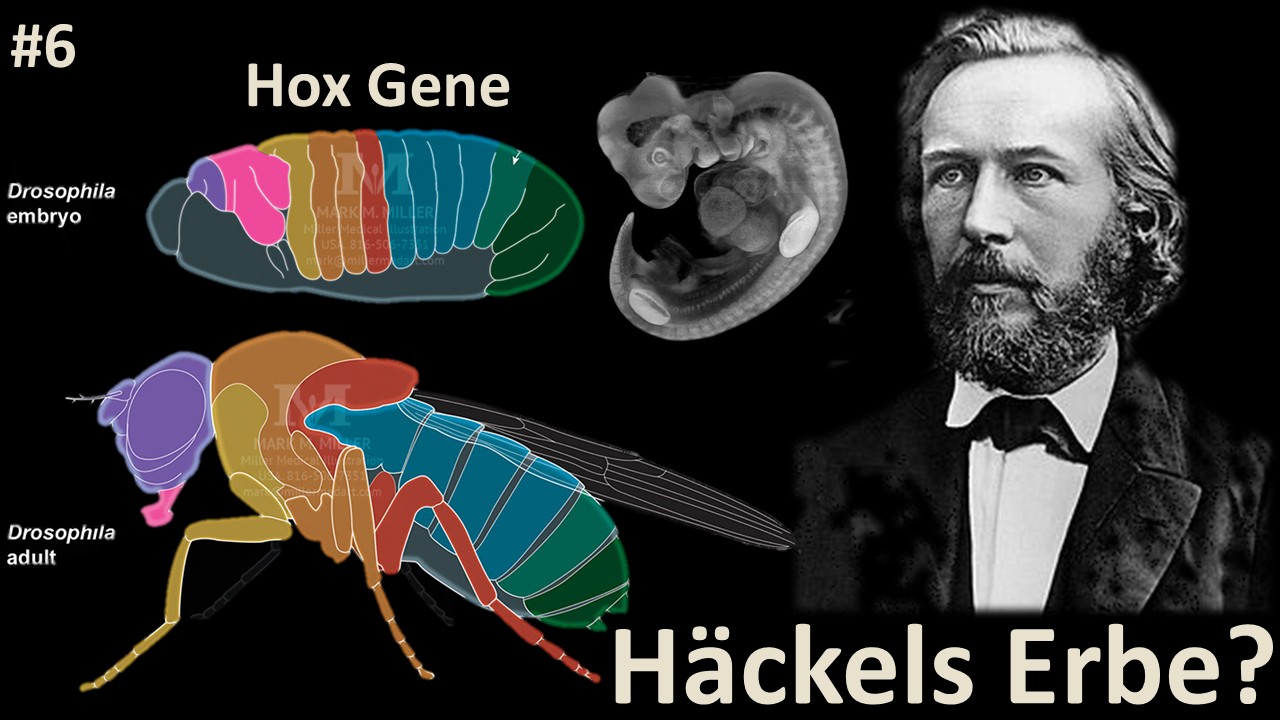
allgemeine Literatur zur Embryonalentwicklung:
Baressi, M. J. F., Gilbert, S. F. (2020): Developmental Biology, Sinauer Associates. 12. Auflage.
Campbell, N.A., Reece, J.B. et al: Biology (z.B. 12. Auflage, 2020); Kapitel 32 „Eine Einführung in die Diversität und Evolution der Metazoa“.
Campbell, N.A., Reece, J.B. et al: Biology (z.B. 12. Auflage, 2020); Kapitel 47 „Die Entwicklung der Tiere“.
Sadava, D., et al. (2019): Purves Biologie. Berlin Heidelberg New York: Springer-Verlag. Kapitel 43 „Entwicklung der Tiere“.
Schmidt-Rhaesa, A. (2007): The Evolution of Organ Systems. Oxford University Press, Kapitel 3 „General Body Organisation“
Wolpert, L. (2019): Principles of Development, Oxford University Press, 6. Auflage, Kapitel 3 „Vertebrate development I: life cycles and experimental techniques“
Pharyungula und Phylotypisches Stadium
Das Pharyungula-Stadium in der Embryologie der Wirbeltiere wird u. a. in den oben erwähnten Lehrbüchern zur Embryonalentwicklung. Einige weitere Literatur soll hier noch ergänzt werden:
Domazet-Lošo T, Tautz D (2010). „A phylogenetically based transcriptome age index mirrors ontogenetic divergence patterns“. Nature. 468 (7325): 815–8. https://pubmed.ncbi.nlm.nih.gov/21150997/
Irie N, Kuratani S (2011). „Comparative transcriptome analysis reveals vertebrate phylotypic period during organogenesis“. Nature Communications. 2 (248): 248. https://www.nature.com/articles/ncomms1248
Irie N, Sehara-Fujisawa A (2007). „The vertebrate phylotypic stage and an early bilaterian-related stage in mouse embryogenesis defined by genomic information“. BMC Biology. 5: 1. https://bmcbiol.biomedcentral.com/articles/10.1186/1741-7007-5-1
Kalinka AT, Varga KM, Gerrard DT, Preibisch S, Corcoran DL, Jarrells J, Ohler U, Bergman CM, Tomancak P (2010). „Gene expression divergence recapitulates the developmental hourglass model“. Nature. 468 (7325): 811–4. https://pubmed.ncbi.nlm.nih.gov/21150996/
Prud’homme B, Gompel N (2010). „Evolutionary biology: Genomic hourglass“. Nature. 468 (7325): 768–9. https://pubmed.ncbi.nlm.nih.gov/21150985/
Tomancak, P. (2011): Verschieden – gleich – verschieden: Die Sanduhr der Embryonalentwicklung https://www.mpg.de/4741352/Aehnlichkeit_Organismen
Wagner, G. P. (2014): Homology, Genes and Evolutionary Innovations. Princeton University Press, besonders Kapitel 1
Naturphilosophie, Ernst Häckel und Karl Ernst von Baer
Einige historische Arbeiten von Ernst Häckel zur Theorie der Rekapitulation:
Ernst Haeckel: Natürliche Schöpfungsgeschichte. 1. Auflage. Georg Reimer, Berlin 1869 und 3. Auflage. Georg Reimer, Berlin 1872.
Ernst Haeckel: Anthropogenie. 1. Auflage. Wilhelm Engelmann, Leipzig 1874.
Ernst Haeckel: Apologetisches Schlußwort. In: Anthropogenie. 3. Auflage, Wilhelm Engelmann, Leipzig 1891.
Einige wichtige Arbeiten von Karl Ernst von Baer über die Embryonalentwicklung:
Baer, K.E. von (1828): Über Entwickelungsgeschichte der Thiere. Beobachtung und Reflexion. Bornträger: Königsberg. Band 1: https://www.deutschestextarchiv.de/book/show/baer_thiere_1828 Band 2: https://www.deutschestextarchiv.de/book/show/baer_thiere_1837
Arbeiten von Wilhelm Roux:
Roux, W. (1895): Gesammelte Abhandlungen über Entwicklungsmechanik der Organismen. 2 Bände. Wilhelm Engelmann, Leipzig 1895. Band 1: https://archive.org/details/gesammelteabhand01roux/page/n7/mode/2up?view=theater Band 2: https://archive.org/details/gesammelteabhand02roux/page/n5/mode/2up?view=theater
Überblicksartikel zur Naturphilosophie aus wikipedia: https://de.wikipedia.org/wiki/Naturphilosophie
Eine allgemeine historische Übersicht über Ernst Häckel, Karl Ernst von Bear, sowie die Naturphilosophie und anderer historischer Quellen:
Abzhanov A. (2013). von Baer’s law for the ages: lost and found principles of developmental evolution. Trends Genet. 29(12):712-22. https://pubmed.ncbi.nlm.nih.gov/24120296/
Neukamm, M: Ernst Haeckels Biogenetisches Grundgesetz und das Konzept der ontogenetischen Rekapitulation https://www.ag-evolutionsbiologie.de/pdf/2007/ernst-haeckels-biogenetisches-grundgesetz.pdf
Wilkins, J. (1996). Darwin’s precursors and influences: 1. transmutationism. http://www.talkorigins.org/faqs/precursors/precurstrans.html
Fälschungen Häckels?
Chase, S., 1999. Is Haeckel’s law of recapitulation a problem? http://www.talkorigins.org/origins/postmonth/feb99.html
Myers, PZ (2003): Wells and Haeckels Embryos: A review of chapter 5 of Icons of Evolution. https://www.talkorigins.org/faqs/wells/haeckel.html
Pickett, Kurt M., John W. Wenzel and Steven W. Rising. 2005. Iconoclasts of evolution: Haeckel, Behe, Wells and the ontogeny of a fraud. The American Biology Teacher 67(5): 275-282
Richards, R. J. (2009): Haeckel’s embryos: fraud not proven. Biol Philos 24:147–154 https://home.uchicago.edu/~rjr6/articles/Haeckel–fraud%20not%20proven.pdf
Richardson, M. K., J. Hanken, L. Selwood, G. M. Wright, R. J. Richards and C. Pieae, 1998. Haeckel, embryos, and evolution. Science 280: 983-986.
Richardson, M. K. and G. Keuck, 2002. Haeckel’s ABC of evolution and development. Biol. Rev. 77: 495-528. (technical)
Talk Origins, Index of Creationist Claims: https://www.talkorigins.org/indexcc/CB/CB701.html
Studie zu den Genomen bei den Bilateria:
Putnam NH, et al (2007). Sea anemone genome reveals ancestral eumetazoan gene repertoire and genomic organization. Science. 6;317(5834):86-94. doi: 10.1126/science.1139158. PMID: 17615350. https://pubmed.ncbi.nlm.nih.gov/17615350/
Allgemeine Literatur zur evolutionären Entwicklungsbiologie, Hox-Genen, Modularität etc.
Es gibt eine Reihe von Lehrbüchern, die sich mit der evolutionären Entwicklungsbiologie befassen, die ein umfassendes Repertoire an Studien und Literatur zitieren. Hier sollen einige gängige Bücher bzw. Buchkapitel vorgestellt werden.
Populärwissenschaftliche Literatur
Es gibt einige populärwissenschaftliche Bücher, die für den Laien eine wertvolle Einführung in die Thematik sein können.
Blumberg, MS (2009): Freaks of Nature; What anomalies tell us about Development and Evolution. Oxford Universty Press
Carroll, SB (2005/2008): Evo Devo Das neue Bild der Evolution. Berlin University Press. Deutsche Ausgabe von 2005 „Endless Forms Most Beautiful. The New Science of Evo Devo and the Making of the Animal Kingdom“ (wahrscheinlich das beste Buch zu der Frage)
Carroll, SB (2006/2008): Die Darwin DNA. Wie die neuste Forschung die Evolutionstheorie bestätigt. S. Fischer. Deutsche Übersetzung von 2006 „The Making of the Fittest. DNA and the ultimate forensic Record of Evolution.
Hemminger, HJ, Beyer, A. (2009): Evolutionäre Entwicklungsbiologie: Schlüssel zum kausalen Verständnis der Evolution. In Neukamm, M. (Hrsg): Evolution im Fadenkreuz des Kreationismus. Vandenhoeck & Ruprecht, Kapitel 6
Kirschner, MW, Gerhart JC (2007): Die Lösung von Darwins Dilemma; Wie die Evolution komplexes Leben schafft. Rowohlt Verlag
Lange, A. (2020): Evolutionstheorie im Wandel. Springer
Metternich, RM. (2021): Panta Rhei Eine Reise auf dem Fluss der Evolution. Wbg Academic, insbesondere der erste Abschnitt „Raum – Gene und Genome“
Neukamm, M. (2009): Evolutionäre Entwicklungsbiologie, Neues Paradigma. Labourjournal 11 / 2009, S. 24 – 27 https://www.ag-evolutionsbiologie.de/pdf/2009/lj_1109_evodevo.pdf
Neukamm, M. (2014): Evolutionäre Entwicklungsbiologie. Kapitel 4 in Neukamm, M. (Hrsg.): Darwin heute. Evolution als Leitbild in den modernen Wissenschaften. WBG
Nüsslein-Volhard C (2004) Das Werden des Lebens. Wie Gene die Entwicklung steuern. Beck, München
Shubin, N. (2008): Der Fisch in uns. S. Fischer, Kapitel 6 „Die besten Körperbaupläne“
Einzelne Kapitel in Lehrbüchern zur Evolution und Entwicklungsbiologie:
Viele Standardlehrwerke zur Evolution und zur Entwicklungsbiologie haben gesonderte Kapitel zur Evo-Devo-Forschung.
Arthur, W. (2011): Evolution A Developmental Perspective. Wiley-Verlag
Barton, NH et al. (2007): Evolution. Cold Spring Harbor Laboratory Press. Kapitel 11 „Evolution of Developmental Programms“
Campbell, N.A., Reece, J.B. et al: Biology (z.B. 12. Auflage, 2020)
Futuyma, D. J. (2005): evolution. Das origional mit Übersetzungshilfen. Spektrum-Verlag. Kapitel 20 „Evolution und Entwickluing“
Gilbert, S., Barresi, M. (2020): Developmental Biology. Oxfort University Press, 12. Auflage. Kapitel 25
Hall, BK (2011): Evolution Principles and Processes. Jones and Bartlett Publishers, Kapitel 11 „Animals as a branch of the tree of life“
Hall, BK, Hallgrimsson, B. (2008): Stickberger’s Evolution. Jones and Barlett Publishers, 4. Auflage. Kapitel 13 „Genes, Development and Evolution“
Sadava, D., et al. (2019): Purves Biologie. Berlin Heidelberg New York: Springer-Verlag.
Wolpert, L. (2019): Principles of Development. Oxfort University Press, 6. Auflage. Kapitel 2 „Development of the Drosophila body plan“ und besonders Kapitel 14 „Evolution and Development“
Zrzavy, J., Storch, D., Mihulka (2009): Evolution ein Lese-Lehrbuch, Spinger-Verlag. Kapitel 4: „Evolutionäre Neuheiten“
Fachliteratur
Eine Reihe an Fachliteratur befasst sich intensiver mit dem Fachgebiet der Evo-Devo, die wichtigsten sollen hier vorgestellt werden (Fett markiert: besonders zu empfehlen):
de la Rosa LN, Müller GB (2021, Hrsg) Evolutionary developmental biology. Springer International Publishing, Cham
Dunlap, JC, Wu, C (2002): Homology Effects. Elsevier Academic Press
Ferrier, DEK (2023): Hox Modules in Evolution and Development. CRC Press
Gilbert, S., Epel, D. (2015): Ecological Developmental Biology: The Environmental Regulation of Development, Health, and Evolution, 2. Auflage
Hall, BK, Olson, WM (2003): Keywords and Concepts in Evolutionary Developmental Biology
Held, LI (2014): How the snake lost ist legs Curious tales from the frontier of Evo-Devo. Cambridge University Press
Held, LI (2017): Deep Homology? Uncanny Similarities of Humans and Flies Uncovered by Evo-Devo. Cambridge University Press
Jeffery, WR (2009): Evolution and Development. Elsevier Academic Press
Minelli, A. (2009): Forms Becoming The Evolutionary Biology of Development. Princeton University Press
Minelli, A., Pradeu (2014): Towards a Theory of Development. Oxford University Press
Schlosser, G., Wagner, GP (2004): Modularity in Development and Evolution. Chicago University Press
Wagner, A. (2011): The Origins of Evolutionary Innovations. Oxford University Press
Wagner, G. P. (2014): Homology, Genes and Evolutionary Innovations. Princeton University Press
Wilkins, A. (2002): The Evolution of Developmental Pathways. Sinauer
Studien zur räumlichen Kollinearität der Hox-Gene bei Drsophophila
Lewis, E.B. (1978). A gene complex controlling segmentation in Drosophila. Nature 276, 565–570.
Kaufman, T.C., Lewis, R., and Wakimoto, B. (1980). Cytogenetic analysis of chromosome 3 in Drosophila melanogaster: the homoeotic gene complex in polytene chromosome interval 84A-B. Genetics 94, 115–133.
Literatur zur ontogenetischen Plastizität (Nervengewebe, Rolle des Cytoskeletts):
Cabej, NR (2013): Building the most complex structure on earth. An epigenetic narrative of development and evolution in animals. Kapitel 1 „Control Systems in the living world“
Lange, A. (2020): Evolutionstheorie im Wandel. Springer, Kapitel 3.5 „Erleichterte Variation – die Perspektive der Zellen
Literatur zur phänotypischen Plastizität und ihrer Rolle in der Evolution
Cabey, NR (2004): Neural Control of Development. Albanet. Kapitel 6 „The Epigenetics of Evolutionary Change
Cabej, NR (2011): Epigenetic Principles of Development. Elsevier Insights. Part II „Neural-Developmental Premises of Evolutionary Adaptation“ und Part III „Epigenetics of Circumevolutionary Phenomena and the Mechanism of the Evolutionary Change“
Cabej, NR (2013): Building the most complex structure on earth. An epigenetic narrative of development and evolution in animals, Kapitel 4 „Living and Adapting to ist own habitat“
Gilbert, S., Epel, D. (2015): Ecological Developmental Biology: The Environmental Regulation of Development, Health, and Evolution, 2. Auflage
Jablonka E, Lamb MJ (2017) Evolution in vier Dimensionen: Wie Genetik, Epigenetik, Verhalten und Symbole die Geschichte des Lebens prägen. S. Hirzel (Engl. (2014) Evolution in four dimensions. Genetic, epigenetic, behavioral, and symbolic variation in the history of life, 2. Aufl. MIT Press, Cambridge)
Kirschner M, Gerhart J (2007) Die Lösung von Darwins Dilemma: Wie die Evolution komplexes Leben schafft. Rowohlt, Hamburg (Engl. (2005) The plausibility of life: resolving Darwin’s dilemma. Yale University Press, New Haven)
Laland KN, Uller T, Feldman M, Sterelny K, Müller GB, Moczek A, Jablonka E, Odling-Smee J (2015) The extended evolutionary synthesis: its structure, assumptions and predictions. Proc R Soc B 282:1019. https://doi.org/10.1098/rspb.2015.1019
Lange, A. (2020): Evolutionstheorie im Wandel. Springer (populärwissenschaftliche Darstellung)
Pfennig, DW (2021, Hrsg): Phenotypic Plasticity & Evolution: Causes, Consequences, Controversies. CRS Press
Pigliucci M, Müller GB (2010, Hrsg) Evolution – the extended synthesis. MIT Press, Cambridge, S. 307–332
Rollo, CD (1994): Phenotypes Their Epigenetics, Ecology and Evolution. Chapman & Hall.
Sultan, SE (2015): Organism & Environment. Oxford University Press
Waddington CH (1942) Canalization of development and the inheritance of acquired characters. Nature 150:563–565
Waddington CH (1953) The genetic assimilation of an acquired character. Evolution 7:118–126
Studien zu den konkreten Beispielen der phänotypischen Plastizität
Augenflecken von Schmetterlingen:
Suzuki Y, Nijhout HF (2006) Evolution of a polyphenism by genetic accomodation. Science 311(5761):650–652
Flügeladern bei Fliegen:
Flatt T (2005) The evolutionary genetics of canalization. Q Rev Biol 80(3):287–316
Waddington CH (1942) Canalization of development and the inheritance of acquired characters. Nature 150:563–565
Verteidigungsstrukturen gegen Fressfeinde bei der Flohkrebsgattung Daphnia:
- A. Agrawal et al. (1999). Transgenerational induction of defences in animals and plants. Nature 401, 60–63.
- R. Hales et al. (2017). Contrasting gene expression programs correspond with predator-induced phenotypic plasticity within and across generations in Daphnia. Mol. Ecol. 26, 5003–5015.
Hörner bei Mistkäfern:
Macagno ALM, Zattara EE, Ezeakudo O, Moczek AP, Ledón-Rettig CC (2018) Adaptive maternal behavioral plasticity and developmental programming mitigate the transgenerational effects of temperature in dung beetles. Oikos 127:1319–1329
Moczek AP, Parzer HF (2008) Rapid antagonistic coevolution between primary and secondary sexual characters in horned beetles. Evolution 62(9):423–2428
Senfglycoside beim Acker-Rettich (Raphanus rephanistrum):
- A. Agrawal et al. (1999). Transgenerational induction of defences in animals and plants. Nature 401, 60–63.
Epigenetische Vererbung bei Mäusen:
Morgan HD, Sutherland HG, Martin DI, Whitelaw E (1999) Epigenetic inheritance at the agouti locus in the mouse. Nat Genet 23:314–318
Hitzeschockproteine bei Drosophila:
Gilbert, S., Epel, D. (2015): Ecological Developmental Biology: The Environmental Regulation of Development, Health, and Evolution, 2. Auflage, S. 142-143
Hitzeschockproteine bei Korallen:
Gates RD, Edmunds PJ (1999) The physiological mechanisms of acclimatization in tropical reef corals. Am Zool 39:30–43
Maternaleffektgene:
Cabey, NR (2004): Neural Control of Development. Albanet. Besonders Kapitel 4 „The Epigenetic Control of Reprodcution in Metazoans
Cabej, NR (2011): Epigenetic Principles of Development. Elsevier Insights. Part I „Epigenetic Basis of Metazoan Heredity“
Cabej, NR (2013): Building the most complex structure on earth. An epigenetic narrative of development and evolution in animals, Kapitel 2 „Epigenetics of Reproduction in Animals“ und Kapitel 3: „Epigenetic Control of Animal Development“
Ebenfalls eine gute Übersicht liefert der Wikipedia-Artikel: https://en.wikipedia.org/wiki/Maternal_effect (zitierte Literatur beachten!)
zu bicoid: https://en.wikipedia.org/wiki/Homeotic_protein_bicoid (zitierte Literatur beachten!)
zu oskar: https://en.wikipedia.org/wiki/Oskar_(gene) (zitierte Literatur beachten!)
zu vasa: https://en.wikipedia.org/wiki/Vasa_gene (zitierte Literatur beachten!)